大象世界


DXVISION Renovate Virtual Pixels Technology
Sep 18,2012
Recently, DXVISION launched the TN-EP12 outdoor LED screen with the brand-new virtual pixels technology. This is the first time for DXVISION to put the core technology LivePixels into outdoor LED screen.DXVISION concerned party introduced, this new product has solved many deficiencies of traditional virtual pixels technology, and it is the result of traditional virtual pixels technology renovation.
TN-EP12 applies DXVISION self-developed control system; physical pitch is 25mm, and virtual pixel pitch is 12.5mm. Per square can display up to 6400 pixels. As a result of a new scanning model and mixing model, the entire screen refresh rate is up to 960Hz with intact 16 bit gray scale and brightness is up to 8500nits, which has solved low refresh rate, serious lose of gray scale and poor image quality of traditional virtual pixels LED screen.
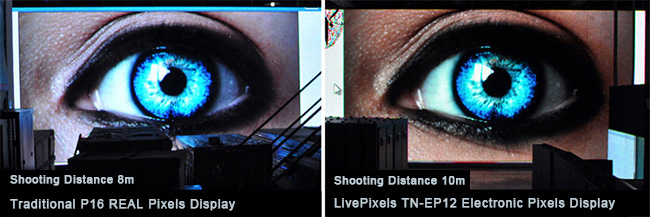
Comparing form of DXVISION virtual pixels technology and traditional virtual pixels technology:
Real pixels display | Traditional virtual pixels display | DXVISION virtual pixels display | |
Resolution Rate | Per LED displays an image pixel | Same area displays 4 times image pixels | Same area displays 4 times image pixels |
Refresh Rate | Common under 1000Hz, sacrificing image quality to reach higher refresh rate. | Each LED should present 4 times at the same scan period, refresh rate reduce to 1/4,so it only up to 200-300Hz,uncomfortable viewing. | Applying the new scan model, refresh rate is up to 3840Hz without image quality lose, so the reduction of refresh rate keeps the same with traditional real pixels screen. |
Mixing Color Effect | Each LED SMD(R/G/B) shines the same time forming the specific color to display an image pixel. | Any 4 adjacent LEDs (R/G/B) shine the same time to display an image pixel. Since the LEDs are at the largest discrete distribution, so the mixing effect is not so good with serious edge jags. | Applying the new color mixing model and integrating the data image processing technology, the virtual pixels reach the same pixel quality level with the real pixels. |
Viewing Distance | To eliminate grainy feeling view, it needs certain distance while watching. | Due to the bad mixing effect, although distance between pixels is reduced, the required viewing distance increases. | Compared to real pixels display with the same pixels density, required distance is a bit bigger, but it is smaller than that of the same LED screen. |
Image Quality | The main LED display in the marketcan process 12bit-14bit gray scale with common image effect. | Due to the reduction of refresh rate and color mixing, it appeas gray scale loss, and the detail presenting capability is worse than real pixels screen. | The intact 16 bit gray scale processing capability presenting image details perfectly and the image quality is remarkably beyond the traditional real pixel screen. |
It is reported that DXVISION launched TN-EP12 virtual pixels screen is to compete with the traditional P16 real pixels screen with its higher cost-effective.
DXVISION vice president Mr. Vincent Wiswood said, this launched TN-EP12product is a great action to extend its technology advantages to outdoor advertising screens. Due to its advantages in the visual performance, DXVISION LED displays are for high-end indoor market since now. However, in the outdoor areas, customers pay more attention to the cost.
With its advantage in core technology and the renovation of traditional virtual pixels, DXVISION virtual pixels screen really achieves the visual performance of real pixels screen, and it has greatly reduced the outdoor advertising display customers' application cost. TN-EP12 will compete with traditional P16 real pixels screen, but it provides more delicate image and lower prices and is expected to become the most cost-effective outdoor advertising screen in the market.